
Overview
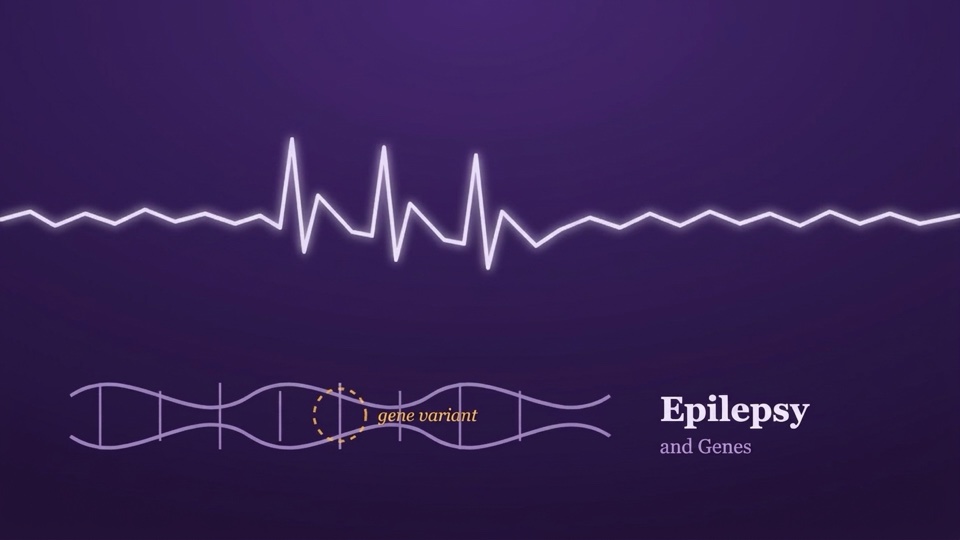
Approximately 30-40% of epilepsies have a genetic contribution; this rate is much higher in early-onset and drug-resistant epilepsies. Genetic diagnosis today is no longer just about "putting a name to it": it changes drug selection, protects against the wrong treatment, clarifies prognosis, and opens the door to gene-targeted treatments.
Who Should Be Offered Genetic Testing?
- Every unexplained epilepsy starting before the age of 3
- Epilepsy that has not responded to two appropriate drugs (drug-resistant) — regardless of age
- When epilepsy is accompanied by developmental delay/autism
- When there is a similar family history, consanguinity, or syndromic features (dysmorphic face, skin findings, microcephaly/macrocephaly)
- Specific electroclinical presentations: infantile spasms, neonatal seizures, fever-sensitive prolonged seizures, myoclonic-atonic presentations
Which Test?
- Epilepsy gene panel (hundreds of genes): first step in most cases; fast and targeted
- Exome/genome: If the panel is negative or the presentation is complex; diagnostic yield increases when studied together with the parents (trio)
- Copy number analysis (microarray/MLPA): Deletions-duplications may be missed on the panel
- In selected cases, mtDNA analysis, metabolic tests and repeat analysis (e.g. CSTB) are added
Reading the Result: Three Boxes
- Pathogenic / likely pathogenic: Establishes the diagnosis; the precision medicine table is then consulted
- VUS (variant of uncertain significance): Neither a diagnosis nor a clearance. Two golden rules: (1) Treatment is not changed based on a VUS, (2) the VUS is reinterpreted every 2-3 years — its classification may change as the knowledge base grows
- Negative: Does not rule out a genetic cause; if the clinical suspicion is strong, further testing is planned
The Precision Medicine Table — The Gene Chooses the Drug
- SCN1A (Dravet): AVOID sodium channel blockers (carbamazepine, lamotrigine...); stiripentol-fenfluramine-cannabidiol are disease-specific options
- SCN2A / SCN8A: Early onset (gain-of-function type) → sodium channel blockers are effective; avoid in the late-onset/loss-of-function type — functional information about the mutation is essential
- KCNQ2: In neonatal seizures, sodium channel blockers are often rapidly effective
- SLC2A1 (GLUT1): The treatment is the ketogenic diet
- TSC1/2 (tuberous sclerosis): Vigabatrin for infantile spasms; everolimus for drug-resistant seizures
- CDKL5: Ganaxolone is the first approved add-on treatment option
- ALDH7A1 / PNPO: Pyridoxine or PLP — "seizures that stop with a vitamin"
- POLG: Valproate is CONTRAINDICATED (risk of liver failure)
- PCDH19 (cluster seizures in girls): Diagnosis prevents unnecessary investigation and false expectations; corticosteroids/clobazam are often used during clusters
- Progressive myoclonic epilepsies (CSTB, EPM2A...): Lamotrigine and sodium channel blockers worsen myoclonus
Prognosis — The Contribution of Genetic Diagnosis
- Diagnosis gives a measurable answer to the questions "what caused it, will it recur, what is the sibling risk?"; a de novo result also reduces feelings of guilt in most families
- The course varies even within the same gene — prognosis must always be discussed in terms of gene + clinical picture together
- In drug-resistant epilepsies, early genetic diagnosis shortens the years lost to the wrong drug, unnecessary investigations, and "diagnostic odyssey" — an indirect but real effect on cognitive outcome
The Era of Gene-Targeted Treatment
Treatment of genetic epilepsy is advancing on two tracks: today's gene-drug matching (table above) and tomorrow's treatments that target the gene itself. The leading example is Dravet: zorevunersen (ASO) is in phase 3, ETX101 (gene therapy) is at an early phase — for details, see our Dravet treatment pipeline and Basic Concepts pages. Similar programmes are underway for SCN2A, KCNQ2 and CDKL5.
Practical Notes for Families
- Keep the original genetic report (PDF) and show it to every new doctor — a single line in the report (such as "gain-of-function") can change the prescription
- Mark a VUS result on your calendar: request reclassification every 2-3 years
- A negative result does not mean "it's over"; request re-evaluation with new panel/exome technologies
- Join patient registries specific to your condition — gene-targeted studies find their participants from these