
Overview
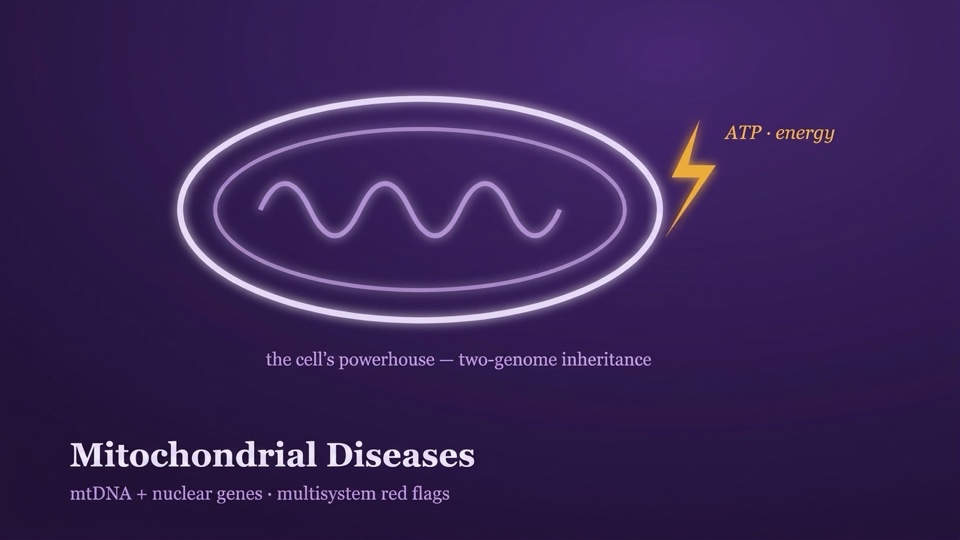
Mitochondrial diseases are a broad family of conditions in which cell energy cannot be produced, affecting mainly the organs with the highest energy demand (brain, muscle, heart, eye, ear). This is not a single disease but a disease of hundreds of genes; the aim of this guide, therefore, is not to teach a single table but a way of thinking: when to suspect it, how to confirm it, what to do in a crisis, what to avoid.
Main Syndromes (brief map)
- Leigh syndrome: Regression with episodes in infancy + basal ganglia/brainstem involvement — the most common severe form of childhood
- MELAS: Stroke-like episodes + elevated lactate + migrainous headaches
- MERRF: Myoclonic epilepsy + muscle involvement
- KSS/CPEO: Ptosis + restricted eye movements (+ retinal-cardiac conduction problems)
- Alpers (POLG): Drug-resistant seizures + liver involvement — the condition behind the valproate ban
Inheritance — Two Genomes
- mtDNA diseases: Transmitted only from the mother; the ratio of defective/normal copies in cells (heteroplasmy) varies from organ to organ → very different presentations within the same family
- Nuclear gene diseases (more common in childhood): Classical inheritance (mostly recessive); sibling recurrence risk 25%
- Counselling can only be done correctly once the question which gene? is answered
When to Suspect? (Red Flags)
- Stepwise regression with infection; prolonged, disproportionate illness periods
- Unexplained elevated lactate (and increased alanine); lactate peak on MRS
- Unexpected organ combinations: such as developmental delay + hearing loss + cardiomyopathy + diabetes + ptosis
- Bilateral basal ganglia/brainstem involvement on MRI; stroke-like episode (not fitting a vascular territory)
- Exercise intolerance, morning vomiting, similar complaints in the family "on the maternal line"
Diagnostic Pathway
- Today the first step is genetic: mtDNA analysis in blood + a broad nuclear panel/exome (trio). Muscle biopsy is reserved for selected cases (some mtDNA disorders are not detectable in blood — in case of suspicion, a muscle/urine sample is required)
- Supportive tests: lactate-pyruvate, acylcarnitine, urine organic acids; markers such as FGF21/GDF15; eye-hearing-heart screening (involvement map)
Management
Crisis (catabolism) management — the family's emergency plan
- During febrile illness/vomiting, avoiding prolonged fasting and giving early sugary fluids/glucose-containing intravenous fluids is the most effective way to prevent crises; a vomiting child should present early
- Fever is brought down early; preoperative fasting periods are planned with the centre
To Be Avoided
- Valproate — contraindicated in POLG (liver failure); caution in general whenever mitochondrial disease is suspected
- Aminoglycoside antibiotics — particularly in m.1555A>G carriers, a single dose can cause hearing loss (ask about a family history of deafness related to aminoglycosides!)
- Prolonged high-dose propofol infusion; caution with metformin and certain other drugs — the list should be carried in the patient's file
Treatment
- Do not miss the treatable subtypes: biotin-thiamine-responsive basal ganglia disease (SLC19A3 — in a Leigh-like presentation, empirical biotin+thiamine is started!), primary CoQ10 deficiency, riboflavin-responsive forms
- Commonly used supplements (CoQ10, riboflavin, thiamine, carnitine, creatine): the level of evidence is limited, chosen according to the patient
- In MELAS stroke-like episodes, many centres apply an arginine protocol; epilepsy-cardiac-nutrition management is planned according to the syndrome
Prognosis — An Honest Framework
- The spectrum is vast: while infantile Leigh presentations can follow a severe course, some individuals remain stable for decades — prognosis can only be discussed with the gene + involvement map
- Markers of poor outcome: early onset, cardiac involvement, recurrent severe crises
- The good news: simple rules such as crisis prevention (avoiding fasting, early intravenous fluids) and discipline about drugs to avoid genuinely change the course
Research Horizon
- New tools capable of editing mtDNA (base editors) are at the preclinical stage — the field's long-term hope
- Syndrome-specific drug trials (Leigh, MELAS) and marker-based follow-up studies are ongoing
- Preventing transmission: in some countries, licensed mitochondrial donation (three-parent IVF) offers a reproductive option to mothers carrying mtDNA disease
Daily Life
- A "sick-day plan" on the fridge: list of sugary drinks, when to go to the emergency department, which intravenous fluid
- The card listing drugs to avoid should be shown at every doctor's visit
- Energy economy: planned rest periods, a second set of books at school, a fatigue diary
- Mito family associations are valuable networks for crisis experience and information about centres