
Overview
Nonketotic hyperglycinaemia (NKH / glycine encephalopathy) is the accumulation of glycine in the brain due to failure of its breakdown. The classic form is among the most severe metabolic encephalopathies of the newborn; milder (attenuated) forms, however, can show significant gains with treatment — which is why distinguishing the form is as important as making the diagnosis.
Genetic Cause
The genes of the glycine cleavage system — most commonly GLDC (~80%), followed by AMT — are disrupted in an autosomal recessive manner. Changes (missense) that leave residual enzyme activity form the basis of the mild forms; genotype is the strongest ground for the prognosis discussion.
Clinical Features
Classic (severe) neonatal form
- Deepening drowsiness in the first 24-72 hours → unresponsiveness; poor feeding, marked hypotonia
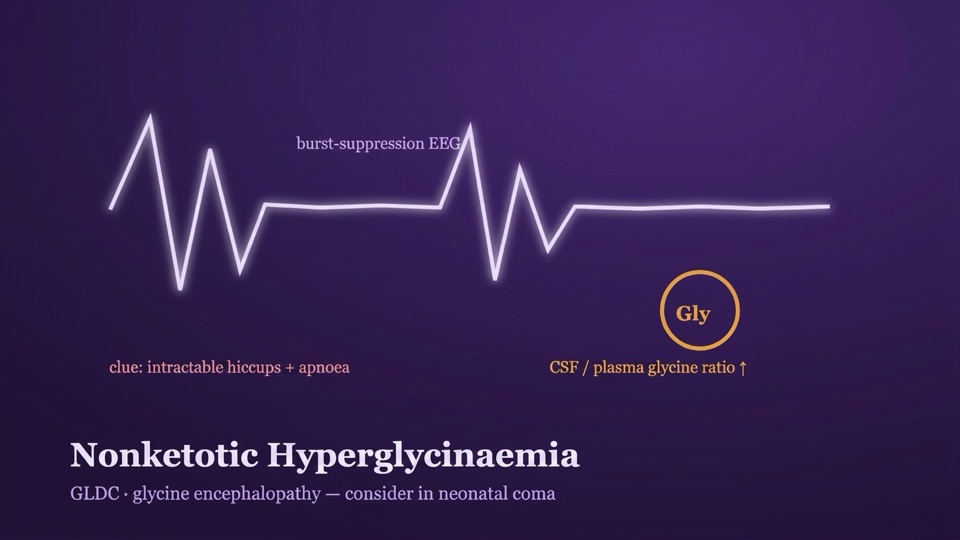
- Persistent hiccups (often present since before birth), apnoea episodes (temporary respiratory support may be required), myoclonic jerks
- EEG: burst-suppression; may evolve into hypsarrhythmia in the following months
Attenuated (mild) forms
- Developmental delay in infancy, hyperactivity-behavioural problems, seizures partially responsive to treatment; some cases go unrecognised until school age
Note: Transient glycine elevation can be seen in the newborn — confirmation and genetic testing are essential before making severe decision statements.
Diagnosis
- Key: the CSF/plasma glycine ratio (simultaneous sample; typically >0.08) — plasma level alone is misleading
- Supportive: glycine peak on MRS, thinning of the corpus callosum; definitive diagnosis is made by GLDC/AMT analysis
- The phrase "severe neonatal encephalopathy without ketosis or acidosis" points to NKH; metabolic samples should be taken alongside sepsis evaluation
Treatment
- Sodium benzoate: Binds glycine and lowers it (dosed to keep plasma glycine within the target range; with level monitoring — carnitine supplementation is added)
- Dextromethorphan (NMDA blocker): Reduces the excitatory effect of glycine; benefit on seizures and alertness has been reported particularly in attenuated forms
- Seizure treatment: standard approaches during the spasm period; valproate is avoided (it raises glycine)
- In the severe form, goals are discussed honestly with the family: treatment may lighten the picture but cannot prevent severe neurological involvement — a care plan (feeding, respiration, comfort) is established together
Prognosis — An Honest Framework
- Classic form: Among surviving infants, profound developmental involvement, drug-resistant epilepsy and swallowing difficulty are the rule; early losses are also not negligible. This reality requires an early and open family discussion in intensive care
- Attenuated form: The spectrum is wide — children who sit, walk, and acquire words with benzoate plus dextromethorphan have been reported; early diagnosis and level-monitored treatment increase gains
- Sibling recurrence risk is 25%: prenatal diagnosis and a plan for being prepared at birth (early sampling + early treatment) must always be discussed with the family
Research Horizon
- Better-tolerated formulations of benzoate and glycine receptor modulators are under investigation
- GLDC gene therapy is being studied in animal models; biomarker studies for the attenuated form are ongoing
Daily Life
- Benzoate doses are divided among meals; early contact is needed for level fluctuations during vomiting-illness days
- Plan alertness windows for physiotherapy and interaction
- Family associations (international NKH networks) are valuable for treatment experience and research announcements