Overview
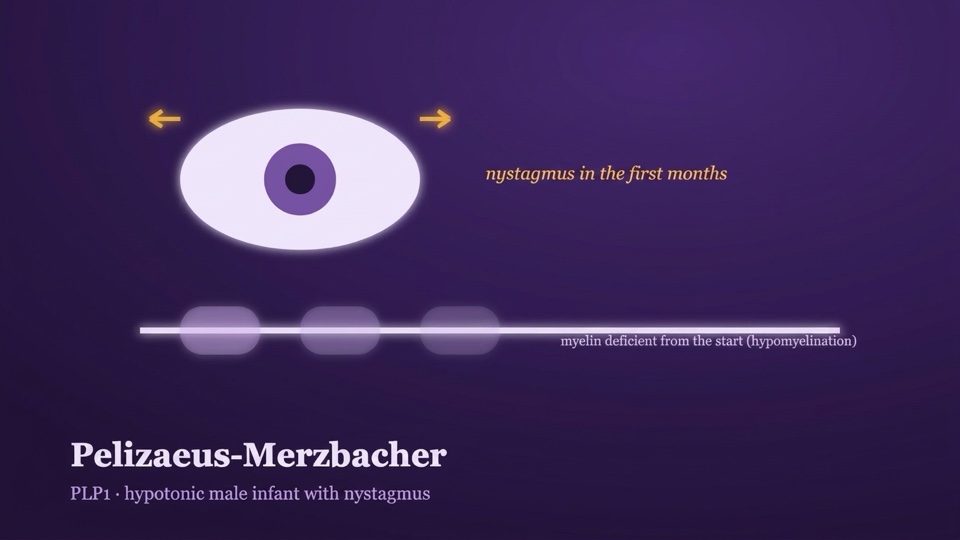
Pelizaeus-Merzbacher Disease (PMD) is an X-linked white matter disease in which myelin is not destroyed but never adequately formed from the start (hypomyelination). The hallmark onset is wandering eye movements (nystagmus) and head tremor, noticed in the first weeks.
Genetic cause — the dose-form relationship
PLP1 is the main protein of myelin and is dose-sensitive:
- Duplication (most common): excess protein accumulates in the cell, causing stress → classic PMD
- Severe point mutations: the most severe (connatal) form
- Absence of the gene (null): a relatively mild picture + marked peripheral neuropathy
- At the mild end lies SPG2, presenting with spastic gait in adulthood
Most carrier mothers are healthy; some may develop mild findings at an older age — maternal testing and genetic counselling (50% risk for subsequent male pregnancies) are standard.
Clinical course
- First weeks-months: Pendular nystagmus, head tremor (titubation), hypotonia; stridor may accompany
- Infancy-childhood: Motor milestones are delayed; hypotonia turns into spasticity over time; ataxia and involuntary movements are added. Nystagmus may decrease over the years
- Long term: In the classic form the course is slow and includes long plateaus: sitting with support, repositioning, supported steps in some children; comprehension and social interaction are relatively preserved, speech is dysarthric but functional in some
- Accompanying problems: feeding-swallowing difficulty, reflux, constipation, scoliosis-hip problems, seizures (in a minority)
Diagnosis
- MRI: markedly delayed, diffuse hypomyelination for age; on follow-up, "lack of maturation" persists (distinguishing it from destructive diseases)
- Definitive diagnosis: PLP1 duplication analysis + sequencing. If PLP1 is negative, PMD-like disease genes (e.g. GJC2) and other causes of hypomyelination are screened with a panel
- In a "hypotonic male infant with nystagmus", MRI should be planned together with an eye examination
Treatment and follow-up
- Current treatment is supportive and systematic: physiotherapy + appropriate seating-posture systems; spasticity management (botulinum/baclofen if needed); orthopaedic follow-up with hip-spine radiographs
- Feeding-swallowing assessment, reflux treatment; gastrostomy transforms growth when needed
- ENT/sleep assessment for stridor-sleep problems; early AAC in communication (including eye-tracking)
Prognosis — an honest framework
- The connatal form is severe and life span may be shortened; in the classic form, individuals often reach adult ages (30s-50s) — planning should be built around "long-term quality of life"
- Motor dependence is marked; nevertheless, preserved comprehension makes school and social participation possible with appropriate communication tools
- At the null-form/SPG2 ends, there are individuals who walk and work
Research horizon
- The ASO approach that reduces PLP1 in the duplication form has notably improved myelin and survival in animal models — preparation for human studies is the topic closest to clinical application in the field
- Transplantation of myelin-forming cells (oligodendrocyte precursors) has been found safe in early trials; studies on efficacy are ongoing
Daily life
- A head-trunk supported seating arrangement should be established early (it improves both feeding and communication quality together)
- Take upper respiratory infections seriously during stridor periods
- Plan carrier counselling for sisters when the time comes
- Stay in touch with PMD family foundations for device-communication experience and research announcements