
Overview
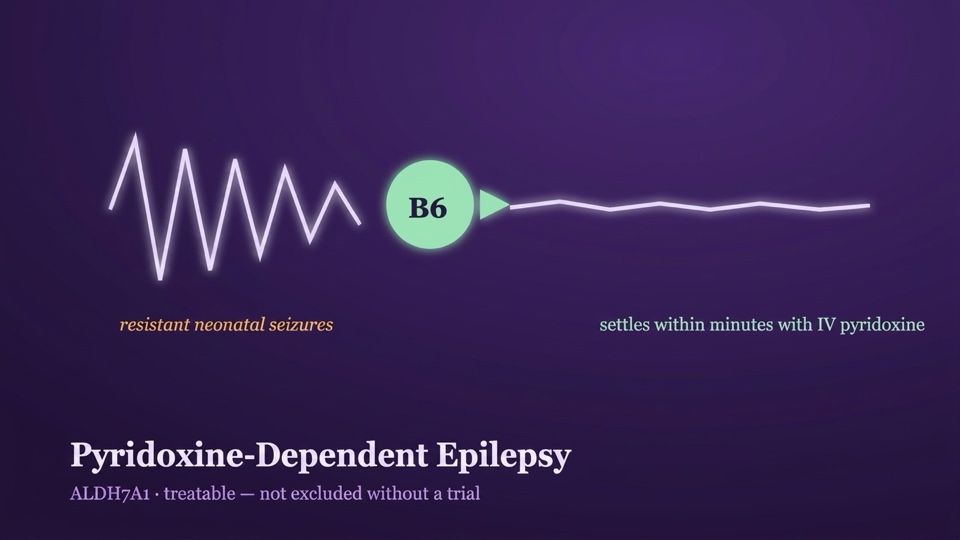
Pyridoxine-dependent epilepsy (PDE) is the vitamin-responsive cause of drug-resistant seizures in the newborn. It carries two messages: a B6 trial is a standard step in drug-resistant neonatal seizures — and modern treatment is now not vitamin alone but a triple strategy that also reduces the accumulating toxic intermediates.
Genetic Cause
The most common cause is ALDH7A1 (antiquitin) mutations (autosomal recessive): lysine breakdown is blocked, and the accumulating intermediate (α-AASA/P6C) consumes active B6 (PLP). In other words, the problem is not B6 intake but the continuous consumption of B6 — which is why the requirement is lifelong.
Sibling conditions: in PNPO deficiency, it is not pyridoxine but PLP that is effective; folinic acid-responsive seizures are the other face of the same ALDH7A1 disease (adding folinic acid provides additional benefit in some cases).
Clinical Picture
- Rhythmic "hiccup-like" movements may be described before birth; the baby is often born irritable and easily startled
- Multiform seizures in the first hours to days (myoclonic, tonic, focal; status is common); response to standard drugs is inadequate
- Less typical presentations are also known: seizures starting in the first months, partially suppressed by drugs — a "late and subtle" PDE may delay diagnosis for years
Diagnosis
- Treatment trial: IV pyridoxine with monitoring and respiratory support ready (response is sometimes seen within minutes as flattening on EEG; apnoea-hypotonia may occur after the first dose — hence the need for intensive care conditions). In a suspicious case that appears unresponsive, an oral trial is continued for several days
- Biomarker: elevated urine/plasma α-AASA (remains elevated even under treatment — it can be tested afterwards as well)
- Definitive diagnosis: ALDH7A1 analysis; PNPO is added in a picture suggesting PLP response
Treatment — The Triple Strategy
- 1) Pyridoxine, lifelong: If stopped, seizures return within days; the dose requirement may increase during febrile illness (an extra sick-day dose plan is written). Very high doses are avoided (risk of peripheral neuropathy) — the goal is the lowest effective dose
- 2) Lysine-restricted diet: Reduces production of the toxic intermediate
- 3) Arginine supplementation: Reduces accumulation by competing with lysine for transport into the brain
- In children who move to triple therapy early, not only seizures but also cognitive outcomes are reported to be better; the dietary component is carried out with the metabolism team
- Folinic acid is added if needed; classic seizure medications can be reduced and stopped in most cases
Prognosis — An Honest Framework
- Seizures: control with B6 is the rule; "breakthrough" seizures are mostly a matter of dose/fever/adherence
- Development: if diagnosis is made without delay and triple therapy is applied, outcomes are clearly good; nevertheless, in a proportion of patients — particularly in the language domain — mild-to-moderate difficulties may remain (the prenatal effect of the disease). Early diagnosis + early triple therapy are the two strongest tools available
- Sibling risk is 25%: for a subsequent pregnancy, a plan to start B6 from birth should be made with the family in advance (some centres give the mother B6 in the last period of pregnancy)
Research Horizon
- Pilot studies of newborn screening using α-AASA on dried blood spots are being carried out — PDE is a natural candidate for the list of "screenable and treatable" conditions
- Substrate-reduction drug candidates that block the lysine pathway further upstream are under investigation
Daily Life
- Never stop B6 suddenly; keep a spare box + report for travel
- Sick-day rules: an extra-dose plan for fever, early presentation for vomiting (missing a dose = risk)
- Informing the school/nursery about dietary products and the amino-acid mixture
- Keep developmental follow-up and language assessment on an annual schedule