
Overview
Progressive myoclonic epilepsies (PME) are a triad of myoclonus + seizure + progressive neurological deterioration. Those with adolescent onset mimic juvenile myoclonic epilepsy (JME); the distinction is vital because the wrong drug markedly worsens PME, and the two main members (Unverricht-Lundborg and Lafora) have very different outcomes.
The Two Main Members
Unverricht-Lundborg (ULD)
- Repeat expansion in the CSTB gene (autosomal recessive); onset at 6-16 years of age
- Myoclonus prominent in the mornings and sensitive to movement/stimuli, plus infrequent generalised seizures
- The course is slow; cognition is largely preserved, with ataxia-dysarthria added over the years
Lafora
- EPM2A/NHLRC1 mutations; onset at 8-19 years of age; abnormal glycogen (Lafora body) accumulates
- Myoclonus + generalised seizures + visual seizures/hallucinations (occipital) — a distinguishing feature
- The course is rapid: cognitive decline and drug-resistant status episodes become established within years
Other causes (sialidosis, MERRF, CLN diseases, Gaucher type 3...) are screened together on the panel.
"Not JME but PME" Warning Signs
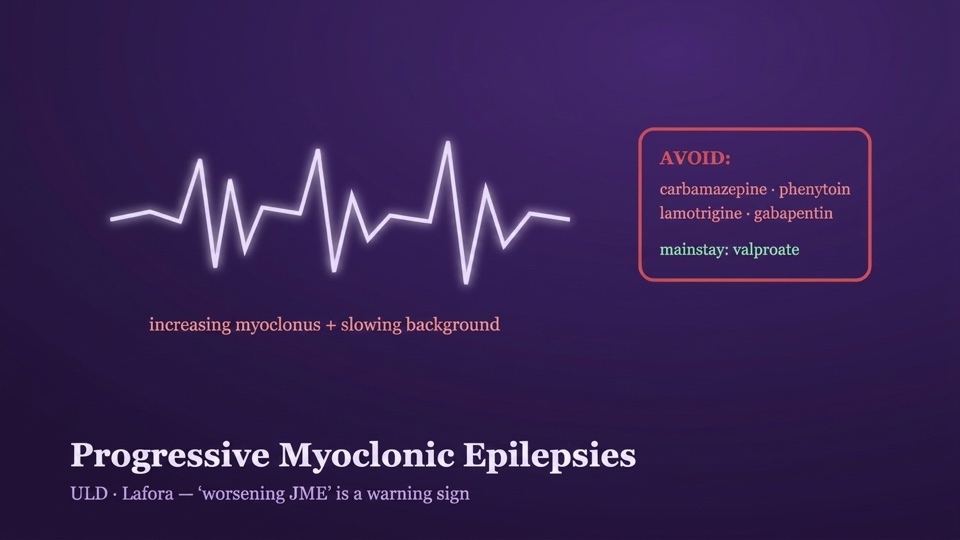
- Myoclonus increasing despite appropriate treatment; beginning to disrupt daily activities
- Decline in school performance, slurred speech, imbalance — these do not occur in JME
- Slowing of background activity on EEG and giant evoked responses
- The addition of visual seizures (a clue to Lafora)
Diagnosis
- An epilepsy gene panel (CSTB repeat analysis may also be requested separately) establishes the diagnosis; when the "drug-resistant JME" label has persisted for more than 1-2 years, the panel should not be delayed
- A genetic diagnosis shapes the prognosis discussion, family counselling and drug list all at once
Treatment
- First-line: Valproate; added for myoclonus are levetiracetam/brivaracetam, clonazepam, zonisamide; perampanel is a current option reported to give notable benefit in PME myoclonus (particularly in ULD)
- In drug-resistant periods, the ketogenic diet and VNS may be considered; a written status plan should be in place
- Drugs to avoid (the most important line on the prescription): carbamazepine, oxcarbazepine, phenytoin, gabapentin-pregabalin and lamotrigine can worsen myoclonus
- Rehabilitation: balance-gait physiotherapy, fall-prevention measures, keyboard use instead of handwriting, energy management; psychosocial support (an adolescent growing up with an illness) should not be neglected
Prognosis — An Honest Framework
- ULD: The term "progressive" is frightening, but with modern treatment the course is mostly slow and manageable: many individuals read and work in adulthood; the main burden is the motor effect of myoclonus. Life expectancy may be close to normal
- Lafora: This must be discussed realistically — severe dependency develops within the first 10 years after diagnosis and limits life; the goals shift towards comfort, seizure-status control and supporting the family
- This contrast sums up why it is not enough to simply say "PME" — naming the gene is essential
Research Horizon
- Lafora: Antisense/enzyme approaches targeting the source of accumulation (glycogen synthesis) are at the preclinical-early clinical stage; metformin is being tried by some centres (evidence limited)
- ULD: New drug combinations directed at myoclonus and neurophysiological follow-up markers are under study
Daily Life
- Arrange the morning routine around the time when myoclonus is most intense (use lidded cups for hot drinks)
- Bathroom-stairs safety; cycling/swimming only under supervision
- Written accommodations at school/work: extended time, keyboard use, a post-fall protocol
- Screen-lighting adjustments if photosensitivity is present; avoidance of sleep deprivation and alcohol as triggers