
The biotechnology company Skylark Bio, which works in the field of Angelman syndrome, announced its gene therapy programme called SKY-AS on 24 September 2026. SKY-AS is a gene therapy candidate being developed for children with Angelman syndrome and is currently at the preclinical stage.
What approach does SKY-AS take?
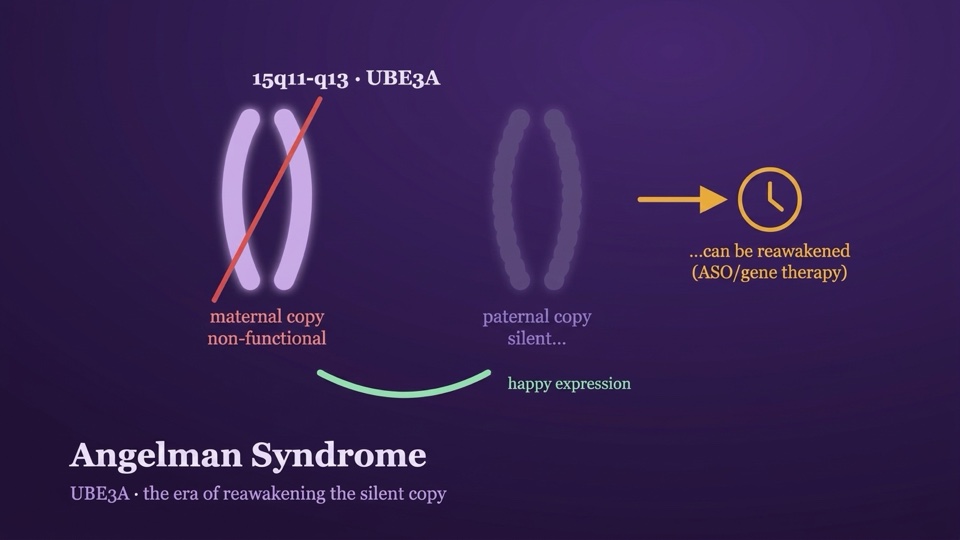
In Angelman syndrome, the maternally inherited UBE3A gene does not function; the paternal copy, meanwhile, is naturally silenced in neurons. As a result, brain cells lack functional UBE3A protein. SKY-AS is a gene therapy approach aiming to deliver a working copy of UBE3A directly to neurons, with the goal of achieving a lasting effect with a single administration.
What stage is it at?
The programme is currently at the preclinical (IND-enabling) stage; that is, human studies have not yet begun. Regulatory application processes for moving into human studies are under way, and the timeline depends on the company's announcements.
Its place in the field
Treatment research in Angelman syndrome has accelerated markedly in recent years. The antisense oligonucleotide (ASO) candidates aiming to "wake up" the silenced paternal UBE3A copy — GTX-102 and ION582 — have reached the phase 3 clinical trial stage. SKY-AS, on the other hand, represents a different class, aiming to replace the gene with a working copy.
For a current staging table of all candidates in Angelman syndrome, see Genetic Therapies — Angelman treatment pipeline.
A note for families
This announcement is a development at the research stage; it is not a recommendation for clinical use. Treatment decisions should always be made together with the physician following your child. Our association will continue to closely follow treatment research in Angelman syndrome and other neurogenetic diseases and to share it with families.