Overview
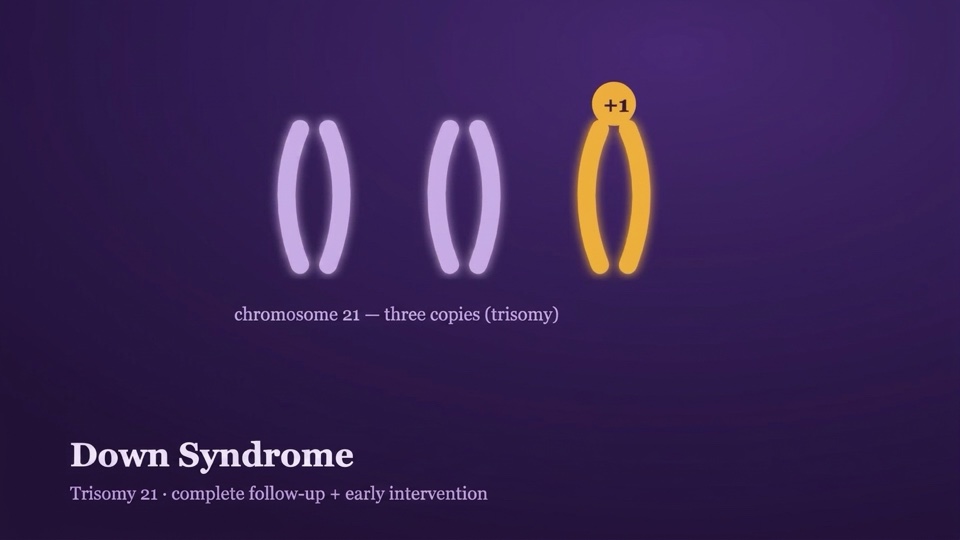
Down syndrome (~1/700-800) is the most common chromosomal condition. The essence of the modern approach is: most obstacles to development are treatable accompanying conditions — our task is to look for them on a schedule. This guide provides that schedule from the newborn period to the transition to adulthood.
Genetic Cause
Free trisomy 21 (~95%), translocation (~3-4%; parental carrier status → recurrence risk, karyotype essential), mosaicism (~1-2%). Frequency increases with maternal age but it occurs at any age; diagnosis is made prenatally (NIPT→confirmation) or at birth by karyotype.
Newborn Period — Checklist for the First Month
- Echocardiography (in every infant; AV canal and other defects in 40-50%)
- Full blood count: transient abnormal myelopoiesis (TAM) occurs in 5-10% — most resolve spontaneously but require follow-up and signal leukaemia risk in the first 5 years; polycythaemia is also common
- TSH (screening + 6th month + annually), red reflex/eye examination (congenital cataract!), hearing screening, feeding-stool follow-up for duodenal obstruction-Hirschsprung disease
- Breastfeeding support (hypotonia makes sucking difficult) and follow-up using Down-specific growth charts
Childhood Follow-up Schedule
- Thyroid: annual TSH (hypothyroidism is insidious and common)
- Hearing: every 6 months to annually; aggressive treatment of otitis with effusion (a prerequisite for language development)
- Vision: annually (refractive errors, strabismus, keratoconus in adolescence)
- Sleep apnoea: symptom enquiry at every visit; a single sleep study around age 4 is recommended (common even in children who appear asymptomatic!)
- Atlantoaxial instability: symptom enquiry rather than routine X-rays (neck pain, change in gait, deterioration in hand skills → urgent imaging); avoidance of activities that strain the neck such as trampolining and somersaults
- Coeliac disease: screening when symptoms are present; constipation is actively managed; vaccinations complete (+RSV/influenza susceptibility)
- Weight-nutrition: growth chart follow-up, physical activity habits established early
Development, Education and Behaviour
- Early intervention from birth: physiotherapy (hypotonia), speech-language therapy (comprehension > expression; speech apraxia is common — sign language/AAC should be used as a bridge), occupational therapy
- Learning profile: visual learning is strong, auditory short-term memory is weak → education supported with visual aids; reading is acquired by most children
- Behaviour: stubbornness and preference for routine are natural; autism (10-15%) and ADHD must not be overlooked — attributing everything to "it's because of Down syndrome" is the most common mistake
- Rare but important to know: a picture of rapid regression in adolescents/young adults (Down syndrome regression) — requires early psychiatric-neurological evaluation
Transition to Adulthood
- Thyroid-hearing-vision-sleep follow-up continues; weight and cardiac (valve) checks
- Brain health: increased risk of early Alzheimer's disease due to the extra dose of the APP gene — baseline cognitive assessment in the 30s and regular follow-up thereafter is recommended; see our Down syndrome treatment pipeline page for protective studies
- Guardianship-legal planning, supported employment and independent living skills should begin to be established in adolescence
Prognosis — An Honest Framework
- Average life expectancy today has extended to around 60 years; the determinants are cardiac repair, infection-sleep management and continuity of adult follow-up
- Cognitive level is typically in the mild-moderate range; individuals who read, work, and engage in art or sport are not unusual — low expectations are a barrier stemming more from the environment than from biology
- Leukaemia risk is increased in the first years of life (more so with a history of TAM) but is absolutely rare and responds well to treatment
Daily Life
- Put the annual checklist on the fridge as a single page (thyroid-hearing-vision-sleep-neck)
- Everyone at home should use sign-supported communication to aid speech intelligibility
- Medical evaluation before sports licensing/activities that strain the neck
- Down syndrome associations are the strongest companion in education rights and the transition to adulthood
Downloadable Documents: Emergency Action Plan + Routine Follow-up Schedule (PDF)
Two documents have been prepared for children with Down syndrome by Nörogender, under the guidance of Prof. Dr. Burak Tatlı. The Emergency Action Plan (3 pages) is crisis-focused: sick-day steps and 112 (emergency ambulance) thresholds, alongside critical warnings for the emergency team — keeping the neck in a neutral position (atlantoaxial instability), small airway (0.5-1 small tube) and sevoflurane bradycardia, a note on cardiac/pulmonary hypertension, and commonly missed conditions: leukaemia (full blood count for pallor/petechiae), hypothyroidism, infantile spasms in infants and moyamoya-stroke. The Routine Follow-up Schedule (2 pages): newborn baseline assessment, a year-by-year table from 1 month to adulthood (TSH-hearing-eye intervals, sleep study for everyone at age 4, neck symptom enquiry) and a record chart.
📄 Emergency Action Plan (PDF, 3 pages) — in Turkish 📅 Routine Follow-up Schedule (PDF, 2 pages) — in Turkish
Complete the documents together with your doctor; keep a copy at home and at school.